Bar staffing software helps agencies schedule bartenders, barbacks, servers, door staff and support crew for bars and nightclubs, handle the last-minute changes that nightlife brings and keep pay and billing accurate for late and overnight hours. Nightlife is one of the more demanding corners of hospitality staffing: demand spikes with events and weather, shifts run past midnight, roles carry permit requirements and cancellations tend to arrive late. This guide covers the workflow and where software helps. The on-demand staffing software page shows how this applies to your segment.
What makes bar and nightclub staffing different from restaurant or hotel staffing?
The roles overlap with other hospitality work, but the operating conditions differ.
In practice, the hardest part is rarely the regular Friday roster. It is the Thursday call that doubles the crew for Saturday.
- Late and overnight shifts, which affect pay rules, transportation and worker availability.
- Demand tied to events, such as a DJ booking, a sports game or a holiday weekend.
- Many specialized roles: bartenders, barbacks, bottle service, door and security-adjacent roles, VIP hosts, coat check, cleaning crews.
- Permit and training requirements for alcohol service, which vary by location.
- Short notice. Promotions are announced late, and attendance can be hard to predict.
- Reputation sensitivity. A single bad night affects the venue’s brand and your agency’s standing.
What usually breaks at scale: A venue calls on Thursday afternoon for a Saturday event with twice the usual crew. If your roster is in a notebook, you will not know who is available until you start calling.
How should an agency structure shifts for a nightlife venue?
See how Vars covers this for your agency
Scheduling, credentialing, and payroll in one platform.
Start with the venue’s night plan.
- Capture the event details: date, doors time, expected crowd size, entertainment, any special service.
- Define roles and counts per zone: main bar, VIP, patio, door, coat check.
- Add setup and closing windows. Prep before doors open and cleanup after close often add hours at either end.
- Plan breaks and relief, especially on long, high-volume nights.
- Assign leads such as a head bartender or floor manager.
- Set a standby list for each role.
Common operational mistake: Scheduling to the posted hours only. Setup, restock and closing add time that has to be both staffed and billed.
How do you plan crew size for a nightlife event?
Venue managers often give you a headcount. Test it against the night plan before you accept it. Look at expected attendance and how it builds through the evening, the number of bars and service points, whether the venue offers table or bottle service, how doors and queues work, and any entertainment that creates a rush at one time. Use the venue’s own history and your own past nights, since a good Saturday last month tells you more than a general rule. Plan each zone separately, and mark the peak window for each one, because the main bar needs more people at midnight than at nine.
What should door and security staffing involve?
Door and security roles carry more responsibility than other positions, so treat them accordingly. Licensing, training and rules about who may perform these functions differ by location, so confirm requirements with the venue and local authorities before you assign anyone. Agree who does ID checks, how capacity counts are kept and who makes decisions when there is a dispute. Brief the crew on the venue’s policies, the escalation path and what they must report. Keep a written record of incidents, with time, location and people involved, and share it with the venue.
How do you handle last-minute changes at a bar or nightclub?
Changes come from both sides: the venue adds staff when a promotion works, and workers cancel when plans change. For more on this, see our guide to handling last-minute callouts in hospitality.
- Venue increases the crew. Check availability by role, notify qualified workers together and confirm the first to accept.
- Venue cuts the crew. Release workers according to your terms, and record the change and who requested it.
- A worker cancels. Follow your callout process: log the gap, notify qualified workers, confirm one and update the venue.
- Extended close. Record the extra hours and approval, since they affect pay and the invoice.
A good practice is to agree in advance with the venue on notice requirements and what happens when a night changes late. For more on this, see our guide to catering and banquet staffing software.
Pro tip for staffing agencies: Keep a short “regulars” list for each venue: workers who know the room and the manager. They are your best first call for last-minute changes.
What rules should you agree with a venue about late changes?
Most late-change arguments come from rules nobody wrote down. Agree these points in advance, in writing, and have your counsel review the wording:
- Notice period for adding or cutting crew, and what happens when a change falls inside it
- Minimum paid time for a worker released early or sent home
- Approval of extended hours, who can approve them on the night and how it is recorded
- Cancellation terms if the event is cancelled or moved
- Who pays for replacement premiums if the venue’s change causes the cost
A venue that has agreed the rules is usually easier to work with on the night, because both sides know what to expect.
How do you manage permits and age or training requirements?
Many nightlife roles require alcohol service training or a permit, and requirements differ by state and locality. Some venues also have their own onboarding or policy requirements.
- Record required documents and expiration dates on each worker’s profile.
- Link them to the role, so a bartender shift cannot be filled by a worker without the needed document.
- Keep venue requirements as a checklist per client.
- Review regularly, because expirations fall on unpredictable dates.
Confirm your obligations with the local authority or counsel. For a broader look at document tracking, see Hospitality Staffing Compliance Tracking. For more on this, see our guide to hospitality timekeeping.
How do overnight hours affect pay and billing?
Late and overnight work often changes how time is recorded and paid. Depending on your agreements and applicable rules, you may need to handle:
- Shift differentials or premium rates for late hours
- Shifts that cross midnight, which can affect which day the hours belong to for overtime and pay purposes
- Tips and how they are reported, where tipped roles are involved
- Different bill rates for night work or special events
Set these up in advance, store the rules on the client or the shift and apply them consistently. Confirm the rules for your state with a payroll provider or counsel.
How do you handle safety, responsible service and incidents?
Nightlife brings risks that daytime events do not, so prepare for them. Make sure workers know the venue’s responsible service policies and who they escalate to. Give each shift a lead who can make decisions and who has the venue manager’s number. Keep an incident log, covering what happened, who was involved, what action was taken and who was told. Think about how workers get home after late finishes, especially at closing, and share your guidance with them before the shift. Review the log after each night and look for patterns by venue, role or time.
How do you build a reliable pool of regulars for a venue?
Venues value people who know the room. Keep a short list of workers for each venue, along with the roles they can do and the managers they know. Introduce new workers by pairing them with a regular for the first shifts. Collect feedback from the venue after each night and note who they request again. Offer regulars first choice of shifts in return for reliability. The benefit is speed: when the venue calls on Thursday, you start from a list of people who already know the layout and the manager.
How does Vars work as bar staffing software?
Vars is software that agencies use to run their operations, and it is not a staffing agency. For nightlife work, Vars connects scheduling, onboarding, check-in, payroll and billing. Coordinators see who is available and qualified for a night, workers confirm through the mobile app, and approved hours flow to pay and invoices, including shifts that run past midnight. See the restaurant staffing software and hospitality staffing software pages for related workflows. You can see how this works in practice on the scheduling software page.
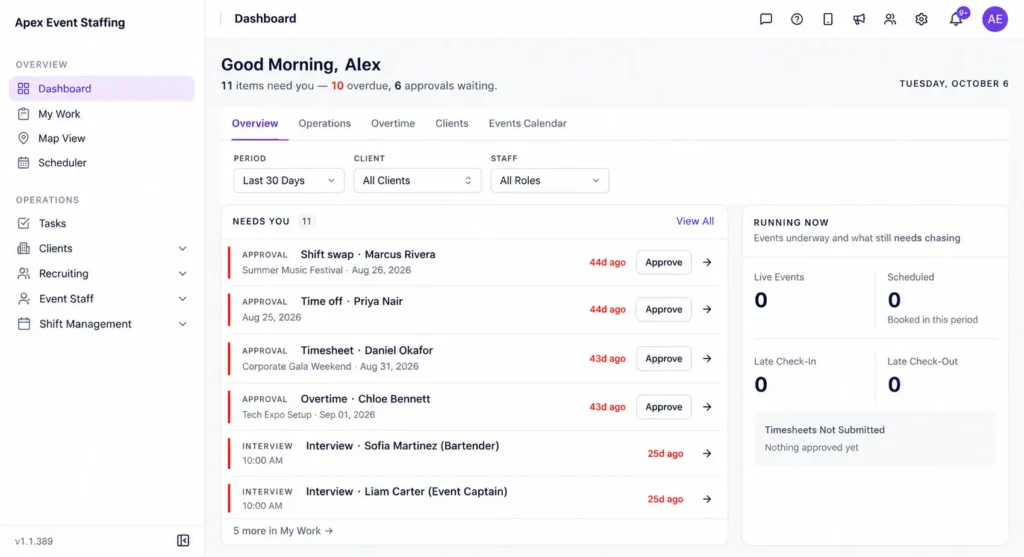
A tool will not predict how busy a Saturday will be. It lets you respond faster when the venue changes its mind, and it keeps the record accurate afterwards.
What should you fix first, and what can wait?
- A single roster that shows availability by role.
- Permit and document tracking tied to roles.
- A standby list for each role and venue.
- Clear rules for late changes with each venue.
- Later: reliability scoring and booking priority for regulars.
What mistakes do agencies make when staffing nightlife venues?
- Staffing to doors time only, and missing the setup and closing hours.
- Not agreeing on late-change rules with the venue, so every change becomes a negotiation.
- Sending unprepared workers. New staff should know the venue layout, the manager’s name and the house rules.
- Skipping permit checks until the night of the event.
- Letting overnight hours go unrecorded, which creates pay and billing disputes.
Pro tip for staffing agencies: Visit or video-walk each new venue once. Knowing the layout and the manager helps you brief workers and spot problems before they happen.
Key takeaway for operations leaders: Nightlife staffing rewards preparation. A short venue profile, a roster you trust, permit checks done in advance and agreed rules for late changes turn a chaotic Saturday into a manageable one. The software helps, but the habits around it decide whether it works.
FAQ
How do agencies staff bars and nightclubs on short notice?
They keep a roster of available, qualified workers, a standby list by role and a process for notifying workers at the same time.
Do bartenders need special permits through a staffing agency?
Requirements depend on location and the role. Check local rules and your client’s policies.
How should overnight shifts be recorded?
Record the actual start and end times, including time after midnight, and apply the pay and bill rules your agreements and local rules require.
Can software help with last-minute changes?
It can show who is available, send notifications quickly and update pay and billing. It cannot create workers who are not in your pool.
How do I decide how many staff a nightclub event needs?
Start with expected attendance, the number of service points, the service style and the peak window, then check the venue’s own history. Plan each zone separately and agree the number with the venue manager.
What should a late-change agreement with a venue cover?
Notice periods, minimum paid time for released workers, approval of extended hours, cancellation terms and who covers replacement premiums. Put it in writing and have counsel review it.
How do I make sure workers get home safely after late shifts?
Share guidance on transport before the shift, avoid unnecessary solo late travel where you can and check that your policy fits local rules and your worker terms.
Conclusion: your next step
Bar staffing software helps agencies handle what nightlife demands: complex roles, late shifts, permit tracking and fast changes. The value is in a roster you can trust and a process you can run when the venue calls at the last minute.
Your next step: list the last five late changes a venue made and how long each took to resolve. Use them to build a simple standby list and a notice agreement. To see how a live roster handles changes, book a demo.