Festival staffing software helps an agency bring on hundreds of temporary workers quickly, schedule them across stages, gates and vendor areas, and pay and bill accurately when the weekend ends. Festivals and seasonal events compress months of staffing work into a few days. The agencies that handle them well do most of the work before the gates open: onboarding workers in batches, building the roster by zone and shift, and setting up pay and billing rules in advance. For more on this, see our guide to building a conference staffing schedule.
For the wider toolset behind a festival crew, see event staffing software for agencies.
Why do festivals and seasonal events strain an agency’s operations?
Volume is only part of it. Festivals combine several pressures at once.
- A fast ramp. You may need to recruit, screen and onboard far more workers than your regular pool.
- Many roles. Gate staff, ushers, vendors’ helpers, cleaning crews, stage hands, hospitality and more.
- Long days and multi-day runs. Fatigue, breaks and turnover between days matter.
- Large sites. Workers need to know exactly where to report.
- First-time workers. Many are new to the agency and may be new to the work.
- Weather and last-minute changes. Plans shift, and the roster has to shift with them.
What usually breaks at scale: Onboarding. Paperwork collected the week of the event creates a queue at the check-in tent, and unfinished files turn into payroll problems later.
How do you recruit and onboard hundreds of temporary workers quickly?
See how Vars covers this for your agency
Scheduling, credentialing, and payroll in one platform.
Treat onboarding as a batch process with clear steps.
- Open applications early, with a short form that captures availability and experience.
- Screen in stages. A quick first screen, then a short call or interview for those who pass.
- Collect required documents electronically, including tax and employment eligibility forms and any client-required items.
- Run any required checks within the time you have, and decide in advance what happens to workers whose checks are still pending on the day.
- Give a short orientation, in person or by video, covering safety, conduct and where to report.
- Mark each worker “ready.” Only ready workers can be scheduled.
Pro tip for staffing agencies: Hold a pre-event onboarding session a week out. Workers who finish before the event day are far less likely to cause delays when it arrives.
Requirements for onboarding documents and checks depend on your clients and your state. Confirm them with counsel and the client. For more on this, see our guide to event payroll, timesheets and invoicing.
What does a festival staffing timeline look like?
The weeks before a festival decide how the weekend goes. A typical sequence, to adjust for your event:
- Eight to six weeks out: confirm demand with the client, open applications and agree rates and roles.
- Six to four weeks out: screen applicants in batches and start electronic onboarding.
- Four to two weeks out: finish checks and orientation, build the zone roster and assign leads.
- Two weeks to one week out: publish the roster, collect confirmations and build the standby list.
- The week of: send reminders, brief leads, test check-in and share site logistics.
- During and after: review each evening, approve hours daily and invoice from approved hours.
If the client confirms late, compress the early steps, but protect the onboarding window. Skipping it costs more on the day than any time it saves.
How should you build a festival roster?
Work from the festival’s operations plan.
- List zones and hours. Entry gates, parking, stages, vendor areas, VIP areas, first aid points, cleanup.
- Define roles inside each zone, including leads who can make decisions.
- Break the festival into shift blocks that follow demand, with extra coverage during gate openings and closing.
- Add a buffer. In seasonal work, some no-shows are normal. Decide how many standby workers you need.
- Plan breaks and meal coverage so zones do not empty at the same time.
- Assign leads first, then fill the roles beneath them.
Common operational mistake: Assigning every worker the same call time for simplicity. Gate crews and cleanup crews have different demand curves.
How do you keep communication clear with a large crew?
A big crew needs a simple communication plan:
- One source of truth for shift details, so workers are not working from different versions
- Reminders the evening before and the morning of, with call time, location and lead contact
- A single channel for changes, so updates reach everyone at once
- Lead-level communication, where leads relay information to their team
- A help contact workers can reach when they are lost or running late
What about pay and billing after a multi-day festival?
Multi-day events create a long list of hours to reconcile: different days, roles, rates and sometimes premium pay for overnight or holiday work. You can see how this works in practice on the AI Candidate Matching page.
- Store rates by role and date before the event.
- Record hours at check-in rather than relying on memory.
- Approve hours daily where possible, so corrections are small.
- Invoice from approved hours, with a breakdown the client can follow.
For seasonal work running over weeks, track total hours per worker so overtime is handled correctly. Rules vary by state and classification, so confirm them with a payroll provider or counsel.
How does Vars support festival and seasonal event staffing?
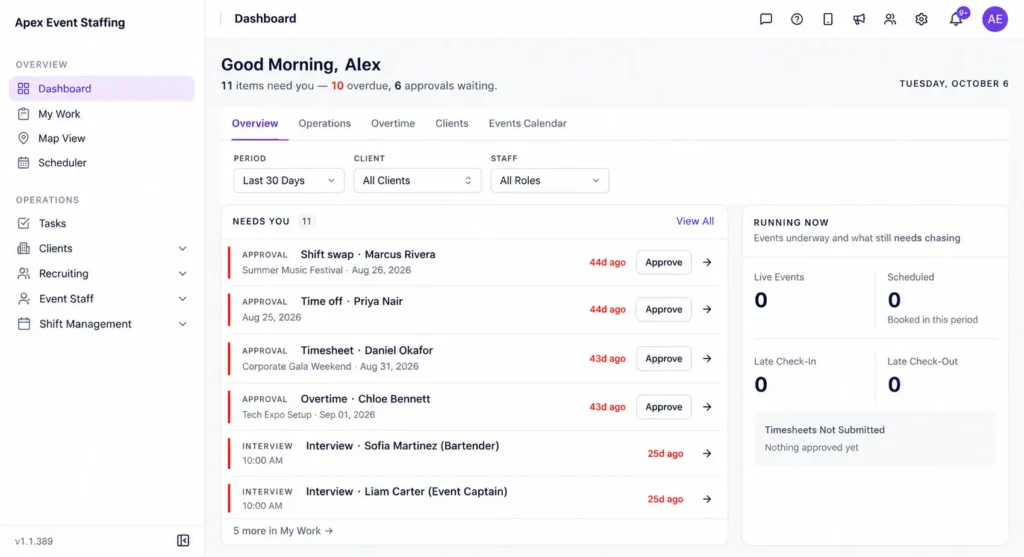
Vars is software that agencies use to run their operations, and it is not a staffing agency. For festivals, Vars connects candidate onboarding, scheduling, check-in, payroll and billing, so workers who complete onboarding can be scheduled, checked in with the mobile app and paid and billed from the same hours. AI Candidate Matching and the AI Voice Recruiter can support the recruiting side when you need to reach and shortlist many applicants quickly. See the event staffing software page for more. For more on this, see our guide to event staff scheduling software.
Software will not solve a thin labor market in your area. If you cannot recruit enough qualified people, start with your sourcing and pay competitiveness. The platform helps you process the workers you attract. For more on this, see our guide to GPS check-in for event crews.
What should you fix first, and what can wait?
- Onboarding in batches, completed before the event.
- A zone-based roster with leads and standby workers.
- Clear communication from a single source.
- Daily approvals of hours.
- Later: a returning-worker pool for next year’s festival, with ratings and priority booking.
How should you plan site logistics for a large crew?
A worker who cannot find the entrance or has no meal break is not working. Cover these before the festival opens:
- Credentials: how workers get their pass, where, and what happens if one is lost.
- Transport and parking: where crew park or arrive, and how long the walk is.
- Meals and water: when and where crew eat, and who covers each zone during meal breaks.
- Shelter and facilities: where crew can rest and use toilets, especially during long shifts.
- First aid and escalation: who to call for a medical issue, a safety concern or a conflict.
Put all of this on one page and send it with the shift details. Walk the site with your leads the day before if the client allows it.
What do you do when the weather changes the plan?
Outdoor events change without warning. Agree the rules with the client before the event: who decides to delay or pause, how crews are told and how paid time is handled if the site closes. Ask the client or venue to put their weather and evacuation procedures in writing, and brief your leads on them. Keep the roster flexible, with a short list of workers who can move zones, and send updates through the single channel you set up so nobody works from old information. Pay treatment for cancelled or shortened shifts depends on your agreement and local rules, so confirm it before the festival, not during it.
How do you keep a large crew reliable across several days?
Fatigue and turnover are the main risks on day two and three. A few habits help:
- Rotate people through demanding zones, such as gates at opening, instead of leaving the same crew there all day.
- Hold a short briefing at the start of each day, covering changes and what went wrong yesterday.
- Check in with leads each evening and fix the issues they raise before the next call time.
- Keep pay on schedule. Workers talk, and a late first payment spreads quickly.
The best crews are also your best recruiters. Note who performed well, so you can invite them back next season.
What should you review after the festival?
Hold a short review within a week, while the details are fresh. Ask five questions: Where did onboarding slow down? Which zones were short, and why? How many no-shows and replacements did you have? How long did approval and invoicing take? Which workers do you want back? Write the answers down with an owner for each fix. That page is the starting point for next year’s plan, and it is the cheapest improvement you will make.
What mistakes do agencies make when they staff a festival?
- Starting onboarding too late. Paperwork collected the week of the event creates queues and incomplete records.
- Under-planning leads. A crew without confident leads in each zone leaves every small decision to the agency’s coordinator.
- Ignoring site logistics. Parking, transport, credentials and meal arrangements affect whether workers arrive on time and stay.
- Skipping a second-day plan. Day one problems repeat on day two if nobody reviews them overnight.
- Leaving billing for later. Without recorded hours and approvals, the invoice becomes a reconstruction.
Hold a short end-of-day review with your leads. Ten minutes on what went wrong improves the next shift more than any rule written in advance.
FAQ
How far ahead should you start staffing a festival?
As early as the operations plan allows. Onboarding takes the longest, so start it first.
How many standby workers do we need?
It depends on your history with similar events and your client’s tolerance for gaps. Track no-show rates across events to refine the number.
How do we onboard workers who start the same day?
Keep a short, mobile-friendly flow for the essentials, and decide in advance what must be completed before a worker can start.
Can we reuse our festival crew for other events?
Yes. Keep their records, performance notes and availability so you can invite them back.
How do we handle overnight or very late shifts?
Plan transport home or to parking, make sure breaks and rest periods are covered, and check the rules that apply to late hours and minors where you operate. Confirm details with counsel.
What if some roles need age or credential checks?
Define which roles need them in the brief, collect proof during onboarding and mark workers ready only when the check is done. Requirements vary by client and location, so confirm them with the client.
What should we do if weather closes the site?
Agree the decision-maker, the communication channel and the pay treatment with the client in writing before the event. Brief leads on the plan so they can act quickly.
What records help us plan next year’s festival?
Keep the roster, the standby list, no-show and replacement counts, close-out timings and a list of workers you want to invite back, with notes on their roles.
Conclusion: your next step
Festival staffing software matters most before the event: onboarding in batches, building a roster by zone and setting up pay and billing rules. Do that work early and the weekend itself is easier to manage.
Your next step: take your largest past event and time how long it took to onboard the crew. If much of that happened in the last week, move it earlier next time and test a batch process. To see how onboarding, scheduling and hours connect, book a demo.